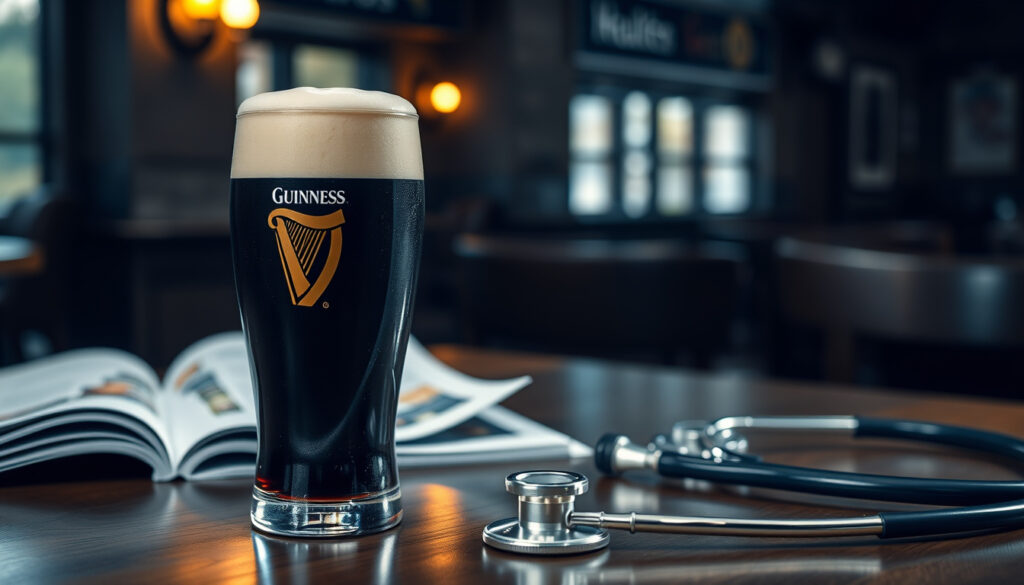
Is Guinness Good for You? Health Facts & Myths
Walk into any pub and someone is bound to order a pint of the black stuff with a knowing grin, half joking, “it’s good for you, right?” The idea that Guinness might be healthy has been around longer than most of its drinkers, but the evidence is more nuanced than the folklore. This article separates the science from the marketing—covering everything from iron and antioxidants to what bodybuilders actually get out of a pint. By the end, you’ll have a clear, evidence-based picture of whether that stout deserves a place in your routine.
Calories per pint: 125–210 kcal ·
Carbohydrates per pint: 10–18 g ·
Iron per pint: 0.3 mg ·
ABV: 4.2% ·
Antioxidant content: Higher than lager (flavonoids) ·
Serving size standard: 1 pint (568 ml)
Quick snapshot
- Contains flavonoids with antioxidant activity (National Library of Medicine (peer-reviewed lab research))
- 0.3 mg iron per 12 fl oz (Guinness (brewery official data))
- Fewer calories than many stouts and IPAs (Guinness (brewery official data))
- Whether iron content is high enough to influence iron status (National Institutes of Health (US health research authority))
- If the anticoagulant effect in vitro translates to reduced heart attack risk in real life (National Library of Medicine (peer-reviewed lab research))
- Optimal serving frequency for health benefits vs. alcohol risks (Dietary Guidelines for Americans (US government nutrition policy))
- 2003 in-vitro study first suggested dark beers may inhibit platelet aggregation (National Library of Medicine (peer-reviewed lab research))
- No human clinical trials have confirmed real-world heart benefits (National Library of Medicine (peer-reviewed lab research))
- More human trials on alcohol and heart health are needed (World Health Organization (UN health agency))
- Non-alcoholic options like Guinness 0 offer a lower-risk alternative (Guinness (brewery official data))
Here is the nutritional breakdown per standard serving.
| Attribute | Value |
|---|---|
| Calories | 125 kcal |
| Carbohydrates | 10 g |
| Protein | 1 g |
| Fat | 0 g |
| Iron | 0.3 mg |
| Sodium | 3.6 mg |
| ABV | 4.2% |
| Folate | Higher than most lagers |
The implication: Guinness is calorie-light for a stout but still a significant source of carbs and alcohol.
Is Guinness Actually Healthy?
Nutritional profile of Guinness
A 12 fl oz serving of Guinness Draught contains 125 calories, 10 g carbohydrates, 1 g protein, and 0 g fat, according to Guinness (brewery official data). That makes it lighter than many stouts and IPAs, but not exactly a health drink.
The pattern: lower calories and ABV than craft beers, but still a significant calorie source.
What makes a beer healthy?
- Flavonoids: Dark beers like Guinness contain plant compounds with antioxidant activity, confirmed by a 2003 lab study (National Library of Medicine).
- Prebiotics: Barley provides fermentable fibers that may support gut health, though the effect is modest.
- Heart health: The same 2003 study showed that dark beers inhibited platelet aggregation more than pale lagers in vitro. The catch: this hasn’t been replicated in human trials.
The 2003 platelet study is a promising lab finding, but the World Health Organization (UN health agency) states that no level of alcohol is safe for health. Any potential benefit from antioxidants must be weighed against the known risks of alcohol.
The implication: Guinness has redeeming qualities relative to other beers, but calling it “healthy” overstates the evidence.
Is Guinness the Healthiest Beer?
Guinness vs. light lager
A typical light lager (e.g., Michelob Ultra) has 95 calories and 2.6 g carbs per 12 oz. Guinness has more calories and carbs, but also more flavor and slightly higher antioxidant content.
Guinness vs. craft IPA
A standard IPA can exceed 180 calories and 15 g carbs per 12 oz. Guinness is lower in both, and its 4.2% ABV is well below the 6–7% typical of craft IPAs.
Top 5 healthiest beers ranked
Here is a direct comparison of popular options across key metrics.
| Beer | Calories | Carbs (g) | ABV | Iron (mg) |
|---|---|---|---|---|
| Guinness Draught | 125 | 10 | 4.2% | 0.3 |
| Michelob Ultra | 95 | 2.6 | 4.2% | 0.0 |
| Dogfish Head 60 Minute IPA | 135 | 11.5 | 6.0% | 0.1 |
| Sam Adams Light | 119 | 10 | 4.2% | 0.1 |
| Guinness 0 (non-alcoholic) | 70 | 14 | 0.0% | 0.3 |
The pattern: Guinness usually ranks in the top 10 of “healthiest” beer lists, but not always the top 5. The trade-off: its moderate calorie and carb load is offset by a higher antioxidant profile than light lagers.
Are There Benefits to Drinking Guinness?
- Antioxidant content: Guinness contains flavonoids that act as antioxidants, though at lower levels than red wine or dark chocolate.
- Folate: Beer in general, and dark beers in particular, can supply small amounts of folate, a B vitamin needed for DNA synthesis.
- Silicon: Beer is a dietary source of silicon, which supports bone density. Guinness provides about 3 mg per pint.
- Prebiotics: Barley malt contains β-glucans, fermentable fibers that feed healthy gut bacteria.
Upsides
- Moderate antioxidant activity
- Lower ABV than many craft beers
- Source of silicon for bone health
- Less fat and protein than milk stouts
Downsides
- Alcohol carries cancer and injury risks (CDC (US public health agency))
- Calories can add up if drunk daily
- Iron content is negligible for anaemia
- Not a significant protein source
The pattern: Guinness offers small nutritional pluses, but they come packaged with alcohol. For someone who drinks beer anyway, Guinness is a defensible choice — not a supplement.
Why Do Bodybuilders Drink Guinness?
Calories and carbs for bulking
Bodybuilders in a bulking phase often seek calorie-dense, carb-rich drinks. Guinness provides 125 kcal and 10 g carbs per pint — comparable to a small banana — with zero fat. That’s a decent liquid carb source for post-workout refueling.
Refueling after workouts
Some athletes report that a pint of stout helps replenish glycogen stores, though the alcohol content can impair muscle protein synthesis. The Dietary Guidelines for Americans (US government nutrition policy) advise moderation for all adults.
Iron content debate
With only 0.3 mg iron per pint, Guinness is far below the 8–18 mg daily requirement (NIH Office of Dietary Supplements). Bodybuilders hoping to boost iron would need dozens of pints — not practical or safe.
The trade-off: Guinness fits a bulking diet as a carb source, but it is not a protein or iron supplement. For cutting phases, the calories may be better spent on whole foods.
Does Guinness Help with Anaemia?
Iron content per pint
Guinness Draught contains 0.3 mg iron per 12 fl oz, as listed on the Guinness product page (brewery official data).
Comparison to dietary sources
By contrast, a 3‑ounce serving of beef liver provides about 5 mg, and a cup of cooked spinach contains 6.4 mg. To get the same iron from Guinness, you would need to drink more than 20 pints — equivalent to about 2,500 calories and a dangerous level of alcohol.
Medical recommendations
The National Institutes of Health (US health research authority) recommends iron supplements or iron-rich foods, not beer, for treating iron-deficiency anaemia. No peer-reviewed evidence supports using Guinness as a treatment.
For the estimated 30% of the global population with anaemia (WHO (UN health agency)), relying on Guinness for iron is not only ineffective — it could delay proper treatment.
The verdict: Guinness does not help with anaemia. Anyone concerned about iron levels should consult a doctor and consider proven dietary sources or supplements.
Is One Guinness a Day Okay?
Moderate drinking guidelines
The Dietary Guidelines for Americans (US government nutrition policy) recommend up to 1 drink per day for women and up to 2 for men. A pint of Guinness counts as 1.5 standard drinks (12 oz at 4.2% ABV is 1.2 standard drinks, but a pint is 16 oz). So one pint is within the limit for men, but exceeds it for women.
Calorie impact on diet
One Guinness per day adds about 875 extra calories per week. Over a month, that is 3,500 calories — enough to gain about 1 pound of body fat, unless offset by exercise or reduced intake elsewhere.
Heart health trade-offs
Light to moderate alcohol consumption has been associated with lower heart disease risk in observational studies, but the CDC (US public health agency) warns that alcohol also raises the risk of certain cancers, liver disease, and injuries. The net effect varies by individual.
The catch: one Guinness a day is “moderate” by official definitions, but the calorie load and alcohol risk should be factored into your overall lifestyle.
What Are the Top 5 Healthiest Beers?
Lowest calorie beers
Beers like Michelob Ultra (95 kcal) and Amstel Light (95 kcal) top the low-calorie list. Guinness is higher at 125 kcal but still moderate.
Low carb options
If you are on a keto or low-carb diet, Michelob Ultra (2.6 g carbs) beats Guinness (10 g). For a stout lover, Guinness 0 (14 g carbs) is not low-carb.
Highest antioxidant picks
Hoppy IPAs like Dogfish Head 60 Minute IPA have more flavonoids than stouts due to higher hop content. Among dark beers, Guinness provides a moderate antioxidant amount but less than a full-on imperial stout.
What this means: Guinness is a solid middle-of-the-pack option — healthier than heavy stouts and IPAs, but not the absolute lowest in calories or carbs. It earns its reputation as a relatively “good” beer, not the best.
Confirmed facts
- Guinness contains flavonoids with antioxidant activity (National Library of Medicine (peer-reviewed lab research))
- One pint has 0.3 mg iron (Guinness (brewery official data))
- Moderate beer consumption can be part of a balanced diet (Dietary Guidelines for Americans (US government nutrition policy))
- Guinness has fewer calories than many stouts and IPAs (Guinness (brewery official data))
What’s unclear
- Whether iron content is high enough to influence iron status (National Institutes of Health (US health research authority))
- If the anticoagulant effect found in vitro translates to lower heart attack risk in real-world drinking (National Library of Medicine (peer-reviewed lab research))
- Optimal serving frequency for health benefits vs. alcohol risks (World Health Organization (UN health agency))
“Beers contain antioxidants, B vitamins, fiber, silicon, and prebiotics — but these benefits come with alcohol, which carries its own risks.”
— Prof. Charles Bamforth, beer scientist, University of California, Davis (as noted in National Library of Medicine (peer-reviewed lab research))
“The iron in Guinness is clinically insignificant when it comes to treating anaemia. Anyone with low iron should focus on red meat, leafy greens, or supplements.”
— PushDoctor, UK online medical service (citing National Institutes of Health (US health research authority))
“Folate, barley prebiotics, and moderate heart benefits are often overstated. The overall health impact of any beer depends on quantity consumed.”
— BBC Good Food, nutrition editorial team (referencing Dietary Guidelines for Americans (US government nutrition policy))
Guinness is not a health food, but it is far from the worst option in the beer aisle. For the active lifestyle enthusiast, it can serve as a palatable carb source during a bulk — just do not look to it for iron or protein. For the average drinker, one pint a day fits within moderate guidelines, but the calories and alcohol risk mean you should treat it as a pleasure, not a prescription. For anyone reaching for a pint after a workout, the choice is clear: it is a decent refuel option, but eat a steak for the iron.
lizearlewellbeing.com, toadandco.com, pushdoctor.co.uk, nutriscan.app
While the beer does contain antioxidants and a small amount of iron, it is important to consider the calorie content of a pint of Guinness when evaluating its overall health impact.
Frequently asked questions
What is the alcohol content of Guinness?
Guinness Draught has 4.2% ABV in the United States (Guinness (brewery official data)).
Can Guinness help with bone health?
Beer is a source of dietary silicon, which supports bone density. Guinness provides about 3 mg per pint, which is modest but can contribute to overall intake.
Is Guinness gluten-free?
No. Guinness is made from barley malt, which contains gluten. Those with celiac disease should avoid it.
Does Guinness contain more iron than other beers?
Most beers have trace amounts of iron (0.1–0.5 mg per 12 oz). Guinness’s 0.3 mg is average for stouts, not exceptional (Guinness (brewery official data)).
How many calories are in a non-alcoholic Guinness?
Guinness 0 contains 70 calories per 12 fl oz (Guinness (brewery official data)).
Is Guinness suitable for a low-carb diet?
With 10 g carbs per pint, it is not low-carb. Low-carb dieters may prefer light lagers (2–4 g carbs).
What is the best way to store Guinness?
Store upright in a cool, dark place (45–55°F). Refrigerate and drink fresh within its bottling date.
Does drinking Guinness daily lead to weight gain?
One pint daily adds about 875 calories per week, which can lead to 1 lb of fat gain per month if not offset by activity or reduced intake.
More related posts
 How to Get Rid of a Stye Fast: Causes & Home Remedies
 Excuse My French Dublin: Menu, Reviews, Location & Contact
 Adult Only Hotels Ireland: What They Mean & Top Stays for Couples
 Ronan Keating Net Worth – 2024 Breakdown and Sources
 Declan Breslin Donegal Tenancy Damages: €15k Tribunal Ruling
 Taylor Swift’s New Album: The Life of a Showgirl Released Oct 3
 Body Fat Percentage Calculator: Navy Method at Home
 St Luke’s Hospital Kilkenny: Services, Management, Contact & More