What Is the Book of Kells – History, Art and Significance
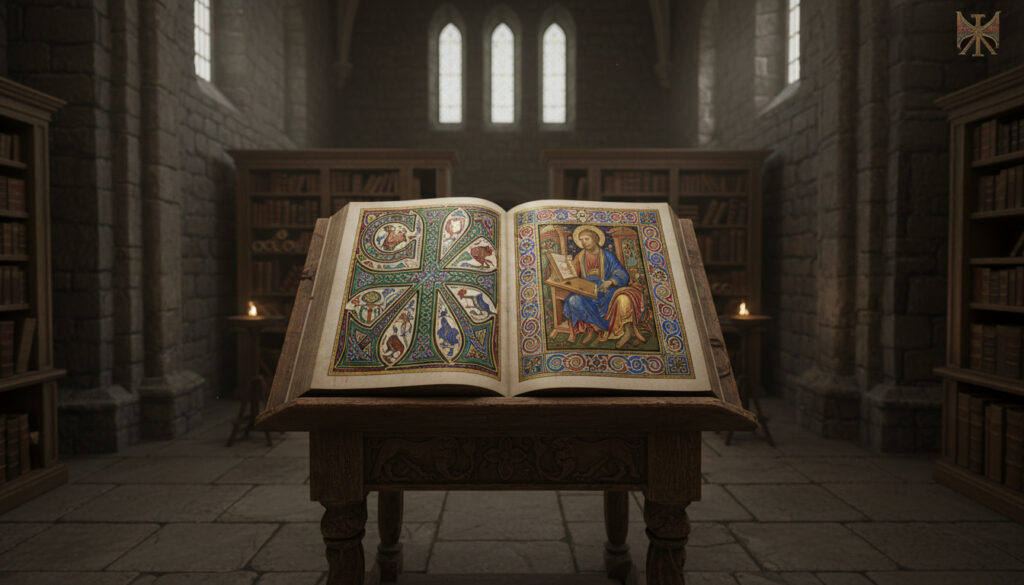
The Book of Kells stands as the pinnacle of Insular art, a medieval illuminated manuscript containing the four Gospels of the New Testament in Latin. Created around 800 AD by Columban monks, this masterpiece represents the zenith of Western calligraphy and Celtic artistic tradition, renowned for its intricate decoration and extraordinary survival across more than twelve centuries.
Despite Viking raids, theft, and the dissolution of the monastic system that produced it, the manuscript remains largely intact at Trinity College Dublin, where it serves as both a sacred religious artifact and a powerful symbol of Irish cultural identity. Its pages preserve a unique fusion of Celtic, Anglo-Saxon, and Mediterranean artistic influences that emerged during the post-Roman period. Art historians recognize this synthesis as characteristic of the Hiberno-Saxon style.
This examination traces the manuscript’s mysterious origins, analyzes the remarkable craftsmanship behind its creation, and explains its enduring significance within art history and medieval studies.
What Is the Book of Kells?
c. 800 AD
Four Gospels (New Testament)
Masterpiece of Insular art
Key Insights: For those interested in learning more about the Book of Kells, かっこいい大人ショートヘア offers a comprehensive overview.
- Represents the final flowering of the Insular manuscript tradition, produced when this artistic style had reached full maturity.
- Bears the name of Kells Abbey where it was housed for centuries, though scholarly evidence suggests it was likely begun elsewhere.
- Comprises 340 surviving folios totaling approximately 680 pages containing the Gospels of Matthew, Mark, Luke, and John.
- Required an estimated 75 years to complete, utilizing nearly 200 calfskins prepared for vellum.
- Functioned primarily as a ceremonial altar piece designed to inspire awe, rather than for practical daily liturgical reading.
- Survived a dramatic theft in 1007 AD that removed its gold jeweled covers and damaged several folios at the beginning and end.
- Preserves Latin biblical text at a critical juncture when monastic scriptoria maintained classical knowledge following the Roman Empire’s decline.
| Attribute | Details |
|---|---|
| Creation Date | c. 800 AD (late 8th to early 9th century) |
| Dimensions | Approximately 33 × 27 cm |
| Folios | 340 surviving (680 pages) |
| Material | Calfskin vellum (nearly 200 calfskins) |
| Script Style | Insular majuscule |
| Text Base | Vulgate (St. Jerome’s 384 AD translation) with Vetus Latina passages |
| Pigments | Mineral, plant, and insect-based; includes lapis lazuli/indigo, gold leaf |
| Current Location | Trinity College Dublin, Old Library (TCD MS 58) |
| Language | Latin |
| Age | Over 1,200 years |
History and Creation of the Book of Kells
The manuscript emerged from the Insular style tradition spanning the late 6th to early 9th centuries, a period of intense monastic artistic production across Britain, Ireland, and Hiberno-Scottish foundations in Europe. Predecessors including the Cathach of St. Columba and the Lindisfarne Gospels established the stylistic foundations upon which the Book of Kells expanded. Metropolitan Museum curators note the exceptional quality of its decorative program compared to earlier manuscripts.
Origins and Attribution
Traditional folklore long attributed the work to St. Columba himself, who died in 597 AD, but paleographic and stylistic evidence definitively dates the manuscript to approximately 800 AD, post-dating the saint by two centuries. Scholars widely accept that Columban monks began the work at Iona monastery in Scotland, possibly completing it at Kells, Ireland, following Viking disruptions. Recent academic research continues to debate the specific attribution of individual pages to different artists.
While the Iona-to-Kells narrative dominates academic consensus, alternative hypotheses suggest entirely Iona-based or Kells-only production. A less substantiated theory proposing Dunkeld or Pictish Scotland lacks archaeological and codicological support. The absence of a definitive colophon leaves the exact scriptorium sequence subject to ongoing debate.
Frequently Asked Questions
What is the Book of Kells?
The Book of Kells is a medieval illuminated manuscript containing the four Gospels of the New Testament in Latin, created around 800 AD by Columban monks. It represents the pinnacle of Insular art and Western calligraphy, featuring intricate Celtic decoration and surviving across more than twelve centuries.
When was the Book of Kells created?
The manuscript was created circa 800 AD, during the late 8th to early 9th century, requiring an estimated 75 years to complete. This places its creation during the final flowering of the Insular manuscript tradition.
Where is the Book of Kells located?
The Book of Kells is housed at Trinity College Dublin in the Old Library, where it has remained largely intact despite Viking raids and a dramatic theft in 1007 AD. It is accessible to the public as both a sacred religious artifact and a symbol of Irish cultural identity.
Who created the Book of Kells?
Columban monks created the manuscript, likely beginning the work at Iona monastery in Scotland and possibly completing it at Kells, Ireland, following Viking disruptions. Traditional folklore incorrectly attributed the work to St. Columba himself, who died in 597 AD, two centuries before the manuscript’s creation.
What materials were used to create the Book of Kells?
The manuscript comprises 340 surviving folios (680 pages) made from calfskin vellum prepared from nearly 200 calfskins. The text was written in Insular majuscule script using pigments derived from minerals, plants, and insects, including lapis lazuli or indigo and gold leaf.
More related posts
 Pizza Hawaiian Near Me: Best Chains, Delivery & Menus
 Best Dating App Ireland: Tinder vs Hinge vs Bumble Comparison
 Is Bread Soda the Same as Bicarbonate of Soda – Yes, Full Guide
 The Cure Dublin 2026: Tickets, Support Acts & Setlist Guide
 On the Beach Reviews: Trustpilot, Refunds & Protection
 Can I Run It? Accuracy, Safety & How It Works (2025)
 Cast of The Odyssey 2026: Confirmed Roles and Rumors
 Property Under 50k Ireland: Where to Find Cheap Houses