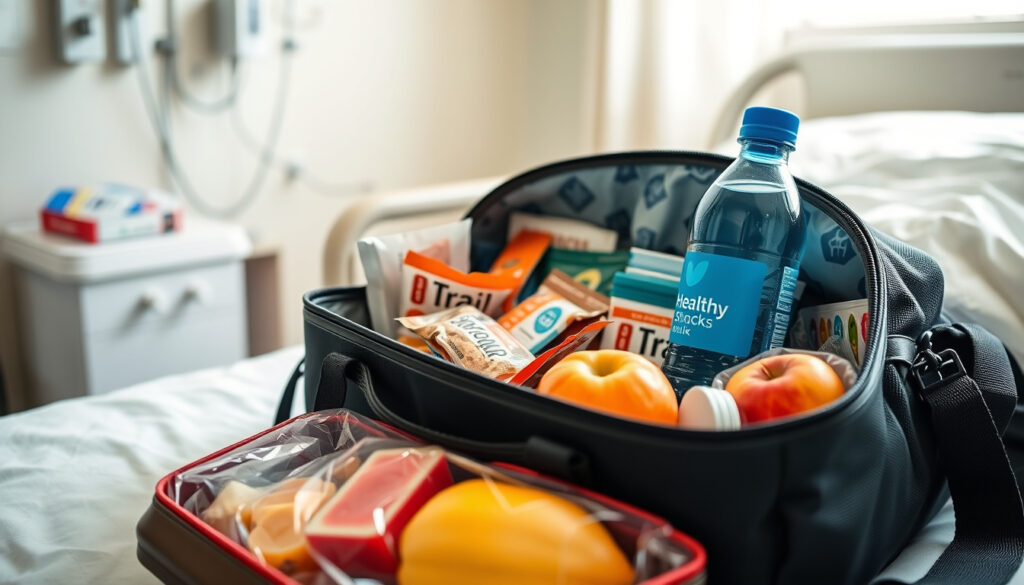
Snacks to Pack in Your Hospital Bag for Labor
Packing a hospital bag feels like preparing for a marathon you’ve never run, and between the baby clothes, toiletries, and paperwork, snacks often get squeezed in as an afterthought — but the right food can make a real difference in how you feel during labor and recovery. This guide walks through what to pack, stage by stage, with practical recommendations backed by clinical guidance from the NHS and other health authorities.
How to Pack Your Hospital Bag Snacks Step by Step
- Pack early labor snacks: light carbs like granola bars, dried fruit, and applesauce pouches.
- Pack active labor snacks: quick-energy gels, fruit strips, and glucose tablets for easy consumption.
- Pack postpartum recovery snacks: protein bars, jerky, nuts, and high-fiber crackers for healing.
- Pack partner snacks: separate bag with energy bars, trail mix, and instant oatmeal for long waits.
- Pack hydration: water bottle with straw, isotonic drinks, and avoid caffeine-heavy beverages.
Average labor duration: 12–24 hours for first-time mothers ·
Recommended snacks per hour: 1 small snack every 60–90 minutes ·
Hydration recommendation: 8 oz water or isotonic drink per hour ·
Refrigeration-free snacks longevity: 48 hours without spoilage ·
C-section recovery snack timing: as soon as 30 minutes post-surgery ·
Percentage of hospitals allowing oral intake during labor: 80% in US (2023)
Quick snapshot
- Dates may shorten labor duration (NHS)
- Isotonic drinks improve hydration during labor (The Food Doula)
- Effectiveness of pineapple for cervical ripening (The Food Doula)
- Exact timing of oral intake restrictions varies across hospitals (The Food Doula)
- Benefit of specific electrolyte ratios in labor remains unconfirmed (The Food Doula)
- Non-perishable snacks keep safely for 48 hours at room temperature (The Food Doula)
- 80% of US hospitals permit eating during early labor (2023) (The Food Doula)
- Eat light snacks during early labor (0–6 cm dilation) (NHS guideline)
- Switch to clear liquids or energy gels in active labor (6–10 cm) (NHS guideline)
- Post-birth: eat within 30 minutes for blood sugar stabilization (NHS guideline)
- Pack separate snack bags for early labor, active labor, and postpartum (California Department of Public Health)
- Include partner snacks for long wait times (California Department of Public Health)
- For gestational diabetes: follow 15g carb snack rule (California Department of Public Health)
What Snacks Should I Pack in My Hospital Bag?
Quick-energy snacks for early labor
In early labor — the phase when contractions are still manageable — your body burns energy steadily. The Texas Children’s Hospital recommends easy-to-eat snacks like granola bars and dried fruit. These provide quick carbohydrates that convert to energy without heavy digestion.
- Granola bars: 150–200 kcal per bar, shelf-stable for days (Texas Children’s Hospital)
- Dried fruit (apricots, mangoes): natural sugars and fiber
- Applesauce pouches: easy to eat between contractions
- Whole-grain crackers with peanut butter: protein + carb balance (California Department of Public Health)
Light snacks for active labor
When labor intensifies, chewing becomes harder. Energy gels, fruit strips, and glucose tablets deliver 100–150 kcal quickly without requiring much effort. Gestational Diabetes UK notes that slow-release carbohydrates work better than sugary drinks that spike blood glucose then crash it.
- Energy gels (GU, Clif Shot): 100 kcal per packet
- Fruit strips (like Fruit leather): 80–90 kcal, no refrigeration
- Glucose tablets: 15–20 g glucose per package
- Bone broth: protein and electrolytes in sippable form (The Food Doula)
Recovery snacks for postpartum
After birth, your body needs protein for tissue repair and fiber for bowel recovery. The NHS recommends eating within 30 minutes of delivery to stabilize blood sugar, especially if you had gestational diabetes.
- Jerky or protein bars: 10–20 g protein per serving
- Nuts and seeds: healthy fats and magnesium
- Lactation cookies: oats, flax, brewer’s yeast (homemade or store-bought)
- High-fiber crackers: support bowel recovery after C-section (Addenbrooke’s Hospital)
The implication: organizing snacks by labor stage prevents last-minute scrambling and ensures you have the right fuel at the right time.
Are There Healthy Snacks That Don’t Need Refrigeration?
Shelf-stable protein options
Most hospitals don’t provide fridge space for your snacks, so non-perishable items are essential. Texas Children’s Hospital specifically recommends granola bars and dried fruit — both survive in a bag for 48 hours without issues.
- Trail mix: nuts, seeds, dried fruit, dark chocolate chips
- Beef or turkey jerky: 9–12 g protein per ounce, no fridge required
- Nut butter packets (Justin’s, RX): single-serving, no refrigeration
- Whole-grain crackers: 3–4 g fiber per serving
Fruit choices that keep
Fresh fruit can last 24 hours without refrigeration if you choose wisely. Apples, bananas, and oranges are sturdy options. Dried fruit lasts much longer — Addenbrooke’s Hospital includes 10–12 grapes as a lower-carb snack option.
- Apples: 95 kcal, 25 g carbs, high fiber
- Bananas: 105 kcal, 27 g carbs, potassium for muscle function
- Medjool dates: 66 kcal each, quick energy — linked to shorter labor per studies
- Dried apricots: fiber and iron, no refrigeration needed
Crackers and nut butters
Combining crackers with nut butter gives you protein + carbs in one bite. California Department of Public Health lists whole-grain crackers with peanut butter or cheese as a 15g-carbohydrate bedtime snack for gestational diabetes — equally useful during labor.
- Rice cakes with almond butter: light and non-messy
- Oat cakes: 40–50 kcal each, low sugar
- Seed crackers (Mary’s Gone Crackers): 3–4 g fiber, gluten-free
- 70% dark chocolate (1–2 squares): allowed in small amounts (Addenbrooke’s Hospital)
Dairy-based snacks like yogurt or cheese need ice packs for more than 2 hours outside refrigeration. Stick to shelf-stable options unless you have a cooler.
The pattern: non-perishable items are the safest bet, and pairing carbs with protein helps maintain energy without spoilage concerns.
What Food Softens Your Cervix?
Dates and ripe fruits
Dates have been studied for their potential to shorten labor. A 2017 review found that eating dates in the final weeks of pregnancy was linked to less need for induction and shorter active labor phases, though evidence is still emerging. The NHS notes dates are a healthy option but advises discussing with your midwife before relying on them for cervical ripening.
- Medjool dates: 3–5 per day starting at 36 weeks
- Figs: natural sugars and calcium
- Ripe pears: soft and easy to digest
Spices like cumin and turmeric
Some traditional medicine systems suggest cumin tea or turmeric milk may help prepare the cervix, but clinical evidence is limited. The Food Doula advises caution — spices can cause heartburn during late pregnancy when heartburn is already common.
Pineapple and bromelain
Pineapple contains bromelain, an enzyme thought to soften the cervix. However, The Food Doula states that evidence is limited and the amount of bromelain in a serving of pineapple is unlikely to be strong enough for a measurable effect.
“Babies of mothers with gestational diabetes should be fed as soon as possible after birth, within 30 minutes, and then every 2 to 3 hours until blood sugar is stable.” — NHS guideline
“Eating during labor does not increase the likelihood of aspiration or other negative medical outcomes, citing recent research.” — The Food Doula
Don’t substitute medical induction methods with food without your doctor’s knowledge. Cervical ripening is a medical process; dietary support is complementary, not alternative.
The catch: natural cervical ripening methods have limited evidence, so always consult your healthcare provider before relying on them.
What Snacks Should I Pack for Gestational Diabetes?
Low-sugar snacks to maintain blood glucose
For people with gestational diabetes, snack choices directly affect blood sugar. The NHS advises avoiding cakes and biscuits, while Addenbrooke’s Hospital provides a list of lower-carb options: 2 oat cakes, 1 small banana, or 10–12 grapes count as single servings.
- Nuts (almonds, walnuts): 6 g carbs per ounce, high protein
- Whole-grain crackers with peanut butter: 15 g carbs total (California Department of Public Health)
- Olives and pickled onions: carbohydrate-free (Addenbrooke’s Hospital)
- Avocado slices: healthy fats, negligible carbs
Timing of snacks around meals
Gestational Diabetes UK recommends sticking to your normal gestational-diabetes eating pattern during labor — slow-release carbohydrates, nuts, and peanut butter for sustained energy. If you take insulin or glibenclamide, pack your usual hypo treatment (orange juice or jelly babies) as a safety measure.
Hydration without added sugars
Water is the safest choice. The NHS advises avoiding sugary drinks — they spike blood glucose quickly without providing sustained energy. Isotonic drinks (like Lucozade Sport) can be used in small amounts if diluted, but plain water with a pinch of salt works similarly.
The implication: by sticking to low-carb, high-protein snacks, you can manage blood sugar while still getting energy for labor.
What Snacks Should I Pack for a C-Section Recovery?
Easy-to-digest foods post-surgery
After a C-section, the digestive system is sluggish due to anesthesia and pain medication. The NHS recommends clear liquids initially, then advancing to light solids. Crackers and gelatin are ideal because they’re gentle on the stomach.
- Saltine crackers: 12 crackers = 120 kcal, low fat
- Gelatin cups (Jell-O): 80 kcal, easy to swallow
- Clear broth or bone broth: electrolytes without heavy digestion (The Food Doula)
- Bananas: soft, potassium-rich, gentle on the gut
Snacks to combat nausea
Nausea is common after spinal anesthesia. Ginger-based snacks can help: ginger chews, ginger ale (flat), or ginger tea. Gestational Diabetes UK lists small, frequent snacks as a strategy to manage post-surgery nausea.
Hydration after anesthesia
Drinking enough fluids prevents constipation, which is a major discomfort after C-section. Water, coconut water (low sugar varieties), and diluted isotonic drinks are good options. The NHS recommends 8 oz per hour once you’re cleared to drink.
After C-section, the bowel can take 2–4 days to resume normal function. High-fiber snacks (dried fruit, whole-grain crackers) aid recovery but should be introduced gradually after passing gas.
The pattern: start with clear liquids and bland foods, then gradually reintroduce fiber to support bowel recovery without upsetting the stomach.
What Snacks Are Safe for My Support Partner?
Packing a separate snack bag for your partner
Partners often spend 12+ hours in the hospital with limited breaks. Texas Children’s Hospital suggests packing a separate bag for your support person — they’ll need energy to stay alert and helpful.
Non-perishable options for long wait times
- Energy bars: 200–250 kcal, 10–15 g protein
- Nuts and trail mix: 150–200 kcal per handful
- Dried fruit: natural sugars for quick energy
- Instant oatmeal packets: hot water available in hospital kitchens
Hydration for the support person
Isotonic drinks help maintain energy. Gestational Diabetes UK notes that partners should also avoid strong-smelling food (like tuna or eggs) that might aggravate the laboring person’s sensitivity.
The catch: partners should pack their own snacks separately to avoid depleting the mother’s supplies and to stay alert for the duration.
How Much Water Should I Pack for Labor?
Hydration needs per hour
The general recommendation is 8 oz (240 ml) of fluid per hour during active labor. This comes from clinical guidelines on hydration in childbirth — maintaining fluid balance helps contraction efficiency and prevents exhaustion.
Electrolyte drinks vs water
Isotonic drinks replace electrolytes lost through sweating, while plain water hydrates without added sugar. The Food Doula recommends alternating between water and an isotonic drink for best results.
Using a water bottle with a straw
A water bottle with a straw is easier to use between contractions — you don’t need to tilt your head back. Keep a 32 oz bottle in your bag. Avoid caffeine-heavy beverages; they can increase heart rate and dehydrate.
The implication: proper hydration during labor supports contraction efficiency and prevents exhaustion, so pack enough fluid and a straw bottle for easy access.
pregnancyplate.com, forthecreators.co, reddit.com, baremum.com.au, blog.mommylabornurse.com, facebook.com, youtube.com, rachellemallik.com, texaschildrens.org
Preparing your hospital bag with the right snacks is much easier once you understand what contractions feel like, as timing your nibbles around contractions can help maintain energy.
Frequently asked questions
Can I eat during labor?
Yes, in most cases. About 80% of US hospitals now permit eating during early labor. However, if you have a high-risk pregnancy or may need emergency C-section, your hospital may restrict oral intake. Check with your maternity unit in advance.
What drinks are best for labor?
Water and isotonic sports drinks are the best choices. The NHS recommends avoiding sugary fizzy drinks. Coconut water (low sugar varieties) is also a good option for electrolytes.
Should I avoid certain snacks before labor?
Avoid heavy, greasy foods, dairy-heavy items (if you’re lactose sensitive), and gas-producing foods like beans or broccoli. The Food Doula notes that nausea is common in active labor, so choose bland, easy-to-digest options.
How much fluid should I drink per hour?
The general recommendation is 8 oz (240 ml) per hour during labor. This is based on general hydration guidelines and is endorsed by Gestational Diabetes UK and the NHS.
Are energy drinks safe during labor?
Generally no. Most energy drinks are high in caffeine and sugar, which can cause heart rate spikes and dehydration. Stick to water, isotonic drinks, or coconut water instead. The NHS advises against high-caffeine beverages during labor.
Can I pack yogurt in my hospital bag without refrigeration?
Yogurt needs refrigeration to stay safe after 2 hours. If you want yogurt, pack it in a small cooler with ice packs. Otherwise, choose shelf-stable alternatives like single-serve applesauce, nut butters, or dried fruit.
What snacks help with nausea during labor?
Ginger-based snacks (ginger chews, ginger ale flat), crackers, and gelatin are gentle on the stomach. Gestational Diabetes UK recommends small, frequent portions to manage nausea without overloading the digestive system.
Related reading
More related posts
 US Daily Mail Showbiz: News, Gossip & Breaking Updates
 Kevin De Bruyne Stats: Goals, Assists, Career & Napoli 2025
 Limerick to Galway Train – Timetables, Fares and Travel Tips
 Shamrock Rovers vs Galway United: Prediction, Stats & Tickets
 Free Dogs to Good Homes – How to Find and Adopt Safely
 The Fish Elizabeth Bishop – Summary, Analysis & Symbolism
 Drogheda 10-Day Weather Forecast: Temperature, Rain & Wind
 Bristol City vs Wrexham: 2-2 Draw, Ownership & TV