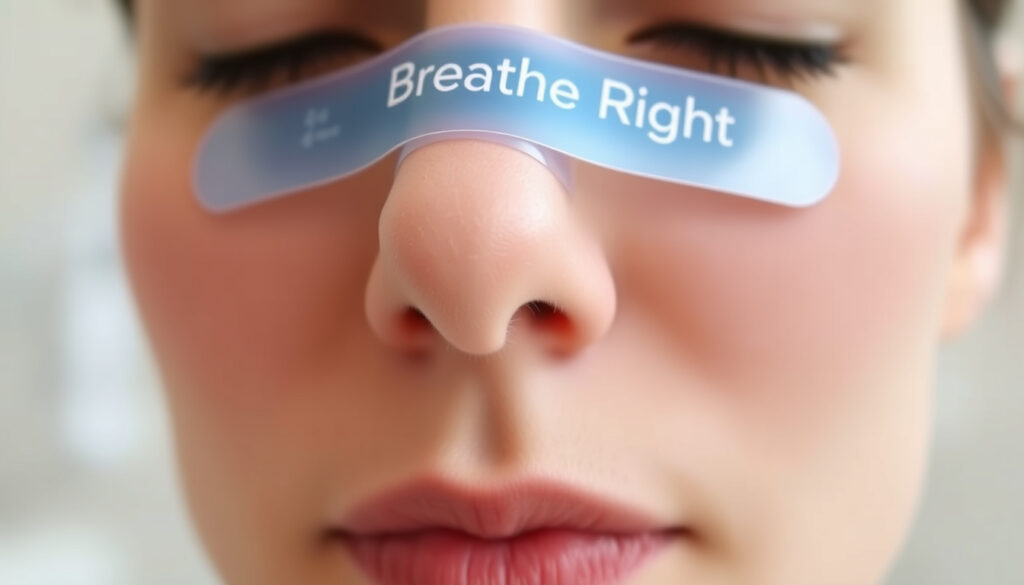
Breathe Right Nasal Strips: How They Work, Benefits & Safety
If you’ve ever woken up with a stuffy nose or struggled to catch your breath during a workout, you’ve probably seen those springy strips across someone’s nose. Breathe Right nasal strips have been around since 1993, promising drug-free relief from nasal congestion and snoring. But how well do they actually work? We dug into the sleep medicine research and dermatology data to separate the confirmed benefits from the hype.
Immediate airflow increase: Up to 31% more airflow ·
Active ingredient: None (drug-free) ·
Primary use: Nasal congestion relief ·
Common duration worn: Up to 12 hours ·
Available sizes: Small/Medium, Large, Extra Strength
Quick snapshot
- Mechanical dilation increases nasal airflow up to 31% (PMC (Sleep Quality and Congestion with Breathe Right Nasal Strips))
- Reduce snoring intensity in individuals with nasal obstruction (Sleep Foundation)
- Safe for daily use when skin is healthy (Breathe Right)
- Effect on sleep apnea severity beyond snoring (Sleep Foundation)
- Consistent improvement in athletic endurance metrics (Henry Ford Health)
- Long-term skin tolerance with nightly application (Breathe Right)
- First introduced in 1993 (Sleep Foundation (2026 product guide))
- Extra Strength Clear variant launched with three-band design (Sleep Foundation (2026 product guide))
- 510(k)-cleared as medical device for congestion and snoring (Superpower (medical device database))
- More research needed on athletic performance claims (Henry Ford Health)
- Dermatological studies on long-term nightly use (Breathe Right)
- Comparison with internal nasal dilators remains understudied (Sleep Foundation)
Five key specs, one takeaway: Breathe Right strips are a simple mechanical device with no active drug, but their effectiveness depends heavily on the specific condition being treated.
| Specification | Value |
|---|---|
| Active ingredient | None (mechanical device) |
| Onset of effect | Immediate |
| Duration of wear | Up to 12 hours |
| Common side effect | Skin irritation |
| FDA classification | Class I medical device |
| Available sizes | Small/Medium, Large, Extra Strength |
| Typical cost per unit | ~$0.60–$1.00 per strip |
Do Breathe Right strips really work?
Clinical evidence from the Sleep Foundation
- The Sleep Foundation (sleep medicine research organization) states that the existing research does not show Breathe Right strips work especially well in resolving nasal congestion or snoring.
- A 2019 study published in PMC (National Library of Medicine) found no significant improvement in sleep quality or nasal congestion compared with placebo over 14 nights in adults with chronic nocturnal congestion.
- However, the strips may help some people breathe more comfortably by holding the nostrils open, which can smooth airflow (Sleep Foundation).
The pattern: the mechanical effect is real—airflow increases up to 31%—but subjective symptom relief often fails to match the objective measure. The trade-off: what works in a lab may not translate to a noticeable difference in sleep quality.
User-reported outcomes for snoring
- Breathe Right strips are cleared for snoring reduction, but the Sleep Foundation (sleep medicine research organization) notes that evidence is mixed.
- Some users report quieter breathing, especially those with nasal obstruction, but the strips do not address the root causes of sleep apnea (Sleep Foundation).
For the average snorer with a stuffy nose, a strip can reduce snoring intensity. But for anyone with suspected sleep apnea, a strip is not a substitute for a CPAP machine or a medical evaluation.
How do nasal strips work?
The spring-like action on nasal valves
- Breathe Right strips are external nasal dilators—adhesive bands with a spring-like plastic strip that lifts the side walls of the nose (PMC (National Library of Medicine)).
- This reduces airway resistance during inhalation, making it easier to pull air through the nasal passages (Henry Ford Health (major hospital system)).
- No pharmacological effect—the benefit is purely mechanical (Breathe Right (manufacturer)).
Difference from internal dilators
- Internal nasal dilators (like cones or springs placed inside the nostril) work from the inside, while Breathe Right strips work externally (Sleep Foundation).
- External strips are easier to apply and remove, but internal dilators may provide more direct expansion of the nasal valve (Sleep Foundation).
What this means: the strip is a simple lever—it opens the door, but it doesn’t fix the hinge. If your congestion is due to inflammation or polyps, the strip alone won’t solve it.
What are the downsides of using nasal strips?
Skin irritation and contact dermatitis
- Repeated use can cause skin redness, blistering, or contact dermatitis, especially if the adhesive is left on for more than 12 hours (Breathe Right (manufacturer)).
- The manufacturer recommends alternating application sites and giving skin a break (Breathe Right).
A user who wears strips every night without rotation risks skin maceration—the same issue that plagues long-term medical tape users. The trade-off between breathing relief and skin health is real.
Tape adhesion issues
- Strips can lose adhesion during sleep, especially if the user sweats or has oily skin (Sleep Foundation (2026 product guide)).
- Some users find that the strip peels off in the middle of the night, negating any benefit (Henry Ford Health).
Limitations for severe obstructions
- Breathe Right strips are not effective for nasal polyps, sinus infections, or deviated septum that requires surgical correction (Sleep Foundation).
- They are a temporary aid, not a long-term solution for anatomical blockage (PMC (National Library of Medicine)).
The pattern: the downsides are mostly skin-related or due to misplaced expectations. The strip is a low-risk tool, but its limitations are real for certain users.
Do nasal strips improve athletic performance?
Findings from Henry Ford Health
- Henry Ford Health (major hospital system) reviewed 19 studies and found no statistically significant difference in VO2 max, heart rate, or perceived exertion when using nasal strips versus not using them.
- A 2008 study in the Journal of Strength & Conditioning Research concluded that the external nasal dilator produced no differences in lactate threshold during submaximal exercise.
What the research says about VO2 max
- A 2020 meta-analysis of 19 articles and 168 participants found no significant improvement in VO2max, heart rate, or perceived exertion in healthy people (Runners Connect (running performance analysis)).
- The extra airflow from the strip does not translate into better oxygen delivery to muscles or a lower heart rate during running (Runners Connect).
The implication: for athletes chasing a competitive edge, the strip is a placebo at best. It may reduce perceived breathing effort, but the numbers don’t lie—VO2 max and lactate levels stay the same.
Is it okay to wear Breathe Right strips every night?
Dermatological considerations for nightly use
- The manufacturer states that daily use is generally safe, but warns against wearing a strip for more than 12 hours at a time (Breathe Right (manufacturer)).
- Prolonged contact with adhesive can cause skin maceration, especially in humid conditions or if the user has sensitive skin (Breathe Right).
Alternating application sites
- To reduce irritation, users should rotate the placement slightly each night and give the skin a break on weekends (Breathe Right).
- Some dermatologists recommend using a barrier cream under the adhesive for sensitive skin (Sleep Foundation (2026 product guide)).
Why this matters: nightly use is feasible for most people, but it’s not zero-risk. The skin is a living organ, and daily adhesive exposure has cumulative effects.
When should I not use nose strips?
Medical conditions that preclude use
- Do not use on broken or irritated skin, such as sunburn, eczema, or open wounds (Breathe Right (manufacturer)).
- Avoid if you have a known adhesive allergy—test a small patch of skin first (Breathe Right).
- Not for children under 5 years of age (Breathe Right).
Skin sensitivities and open wounds
- If you have a history of contact dermatitis from medical tapes, consider using a hypoallergenic version or avoid strips altogether (Sleep Foundation).
- After facial surgery, wait until the skin is fully healed before applying a strip (Breathe Right).
The trade-off: the strip is a low-risk device, but it’s not for everyone. Those with sensitive skin or specific nasal conditions should look for alternatives.
Upsides
- Drug-free mechanical relief
- Immediate increase in nasal airflow
- Can reduce snoring in some users
- Easy to apply and remove
- Available over the counter
Downsides
- Skin irritation with repeated use
- No proven benefit for athletic performance
- Not effective for nasal polyps or sinus infections
- Can lose adhesion during sleep
- Does not treat sleep apnea
Confirmed facts vs. what’s unclear
Confirmed facts
- Mechanical dilation of nasal valves increases airflow up to 31% (PMC (National Library of Medicine))
- Reduce snoring intensity in individuals with nasal obstruction (Sleep Foundation)
- Safe for daily use when skin is healthy (Breathe Right)
What’s unclear
- Effect on sleep apnea severity beyond snoring (Sleep Foundation)
- Consistent improvement in athletic endurance metrics (Henry Ford Health)
- Long-term skin tolerance with nightly application (Breathe Right)
What experts say
“Nasal strips are basically adhesive tape stretched across the bridge of the nose to open the nasal valve. They work mechanically, not chemically.”
— Henry Ford Health (sleep medicine specialists)
“The existing research does not show that Breathe Right strips work especially well in resolving nasal congestion or snoring.”
— Sleep Foundation editorial review (sleep medicine research organization)
“We reviewed 19 studies and found no statistically significant difference in VO2 max, heart rate, or perceived exertion when using nasal strips.”
— Henry Ford Health (athletic performance research)
For the average person dealing with occasional nasal congestion or light snoring, Breathe Right strips offer a low-risk, drug-free option that can provide noticeable relief. But for athletes seeking a competitive edge, the evidence is clear: the strip doesn’t deliver. And for anyone with sleep apnea, serious nasal obstruction, or sensitive skin, the strip is not the answer. The choice is straightforward: use it for what it’s proven to do—open nasal passages mechanically—and don’t expect it to fix deeper problems.
Related reading: How nasal strips work · Best snore strips
Frequently asked questions
Can I wear Breathe Right strips while sleeping on my side?
Yes, the strips are designed to stay in place during sleep, including side-lying. However, if the strip loses adhesion due to pressure or sweat, it may peel off. Ensure the skin is clean and dry before application.
Do Breathe Right strips help with allergies?
They can help with nasal congestion caused by allergies by mechanically opening the nasal passages. However, they do not treat the underlying allergic reaction. For allergy relief, antihistamines or nasal sprays are more effective.
Are Breathe Right strips safe during pregnancy?
There are no specific contraindications, but pregnant women should consult a doctor before use, especially if they have high blood pressure or other pregnancy-related conditions. The strips are drug-free, so the risk is low.
Do Breathe Right strips expire?
Yes, the strips have a shelf life. Check the expiration date on the package. Using expired strips may result in reduced adhesion or weakened spring effect.
Can I cut Breathe Right strips to fit my nose?
No, cutting the strip can damage the spring mechanism and reduce its effectiveness. The strips are designed in specific sizes for a reason. Use the size that best fits your nose.
Do Breathe Right strips work for deviated septum?
They can help with mild deviated septum symptoms by opening the nasal passages, but they do not correct the structural deviation. For significant obstruction, surgical correction may be needed.
More related posts
 Mark Zuckerberg Net Worth 2026: $193.5B
 How to Boil Potatoes: Cold Water Start, Times & Mistakes
 Motor Neurone Disease Symptoms: Early Signs & Red Flags
 40th Birthday Gift Ideas: From Tradition to the Unexpected
 Turnip Cake Near Me: Where to Buy, Eat & Store Lo Bak Go
 H&M Dundrum Town Centre: Location, Hours, Phone & Guide
 Boots Portlaoise Opening Hours & Pharmacy Services
 Portlaoise to Dublin Airport: Bus Timetables & Tickets