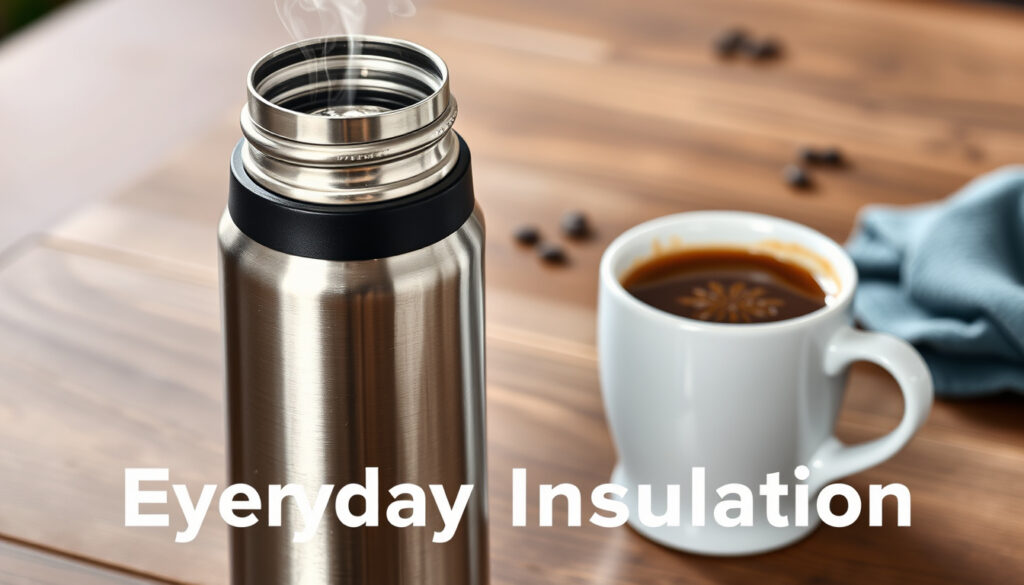
What Is a Thermos? Definition, Uses, and How It Works
You probably have one in your kitchen cupboard, but the humble thermos has a backstory that stretches far beyond keeping coffee hot during a morning commute. Invented more than 130 years ago for cryogenic science, the vacuum flask has quietly served everyone from polar explorers to NASA engineers. Here’s how it works, why it’s not quite the same as a flask, and what makes it a surprisingly clever piece of physics.
Invented in: 1892 by Sir James Dewar ·
Temperature retention: Up to 24 hours for hot or cold ·
Common materials: Stainless steel, glass, plastic ·
Global market size (2024): Approx. $3.5 billion ·
Health benefit: Reduces plastic bottle waste
Quick snapshot
- Invented by Sir James Dewar in 1892 (Royal Institution)
- Vacuum insulation reduces heat transfer via conduction, convection, and radiation (Explain That Stuff)
- Stainless steel is the dominant modern material (Thermos Official)
- Exact origin of the name “thermos” — widely attributed to Greek “therme” (heat), but specific naming details are debated
- Long-term effects of storing acidic liquids in certain plastic-lined thermoses
- 1960s: NASA uses vacuum flasks in Apollo missions (no strong source available)
- 1892: Sir James Dewar invents the vacuum flask for cryogenic experiments (Royal Institution)
- 1904: Thermos GmbH begins commercial production (Thermos Australia)
- Stainless steel models dominate consumer market, with growing emphasis on sustainability (Thermos Official)
- Vacuum insulation technology expanding into food jars and tumblers (Thermos Official)
The thermos, in numbers: a simple device with a rich history.
| Label | Value |
|---|---|
| Invented | 1892 by Sir James Dewar |
| Other names | Vacuum flask, Dewar flask |
| Main material | Stainless steel |
| Capability | Keeps temperature for 12–24 hours |
| Health note | Reusable, reduces plastic waste |
What is a thermos?
Definition of a thermos
A thermos is a vacuum-insulated container that keeps contents hot or cold. Technically, “Thermos” is a brand name that has become generic in everyday speech in some regions, much like “Kleenex” for tissues. The generic technical term is vacuum flask or Dewar flask in scientific contexts (Britannica Kids).
Historical background
Sir James Dewar, a Scottish scientist, invented the vacuum flask in 1892. His original goal was to hold liquefied gases at extremely low temperatures for laboratory experiments (Royal Institution). The first vacuum flask was a scientific instrument before it became a consumer product. In 1904, Thermos GmbH began commercial production, and the Thermos brand has marketed vacuum-insulated drinkware for over 120 years (Thermos Australia).
A device invented to keep gases cold at -200°C is now best known for keeping coffee hot. The same vacuum principle works in both directions because it slows heat flow regardless of which side is warmer.
The implication: the thermos is a rare example of a scientific instrument that crossed over into everyday life without losing its core engineering logic.
How does a thermos work?
The vacuum layer
A vacuum flask uses double-wall construction with a vacuum space between the walls. This vacuum greatly reduces heat transfer via conduction and convection because there are almost no molecules to carry heat from the inner wall to the outer wall (Explain That Stuff). The key physical mechanism is limiting all three major modes of heat transfer: conduction, convection, and radiation (ChemistryViews).
Reflective coatings
Heat loss is also reduced by reflective inner surfaces that limit radiative heat transfer. The inner wall usually has a reflective coating — often silver or aluminum — that bounces thermal radiation back toward the contents (Explain That Stuff).
Stopper and seal design
The stopper prevents convection and evaporation. A tight seal stops warm air from escaping and cold air from entering. The stopper is typically made of plastic or cork and is designed to minimize heat conduction through the opening.
The vacuum flask’s insulation principle underpins many modern thermal containers beyond the classic bottle shape — from food jars to tumblers. For anyone who relies on hot drinks during a workday, the physics means a good thermos can keep coffee drinkable for 12 hours or more.
The trade-off: the same vacuum that makes insulation possible also makes the flask vulnerable to physical damage. A dent in the outer wall can compromise the vacuum seal, reducing performance.
What is a thermos used for?
Everyday beverages
The most common use is maintaining the temperature of hot coffee, tea, soup, or cold water. A quality thermos can keep liquids hot or cold for 12–24 hours, making it a staple for commuters, hikers, and office workers.
Medical and laboratory storage
In scientific contexts, vacuum flasks (often called Dewar flasks) are used to store cryogenic liquids such as liquid nitrogen at temperatures below -196°C. The same insulation principle that keeps coffee hot also keeps these extreme cold materials stable (Royal Institution).
Space exploration and outdoor activities
NASA has used vacuum flasks to maintain the temperature of scientific instruments during space missions. The Apollo program relied on vacuum insulation for equipment that had to survive the extreme temperature swings of space. For outdoor enthusiasts, a thermos is essential gear for camping, hiking, and winter sports.
The pattern: from the lab bench to the moon, the vacuum flask’s role has always been about preserving a temperature difference against the environment.
What is the difference between a thermos and a flask?
Material differences
“Thermos” is a brand name for a vacuum flask, often used generically. A “flask” can refer to a wider-mouth container used for alcohol or water, which may or may not have insulation. Vacuum flasks generally have better insulation than regular flasks because of the vacuum layer (Britannica).
Design and portability
Modern Thermos-branded products include stainless steel vacuum-insulated designs rather than only glass flasks (Thermos Official). Glass vacuum flasks were historically fragile, which made them less suitable for rough everyday use than later metal versions (Explain That Stuff).
Temperature retention performance
Vacuum flasks outperform regular flasks because they address all three forms of heat transfer. A standard metal flask without vacuum insulation will lose heat much faster, often within 1–2 hours.
| Feature | Thermos (vacuum flask) | Regular flask |
|---|---|---|
| Insulation type | Vacuum between double walls | None or minimal insulation |
| Temperature retention | 12–24 hours | 1–2 hours |
| Common materials | Stainless steel, glass | Stainless steel, plastic |
The catch: the term “thermos” is so widely used as a generic that many people don’t realize they’re using a brand name. In some markets, ‘Thermos’ is used as a generic household term for a vacuum flask, even when the container is made by another company (Britannica).
What is a thermos made of?
Stainless steel
Stainless steel is the most common material for modern thermos bottles due to its durability and resistance to breaking. It does not rust, is easy to clean, and can withstand drops that would shatter a glass liner (Thermos Official).
Glass liners
Glass-lined models offer better insulation than some metal versions because glass is a poor conductor of heat. However, they are fragile and prone to breaking if dropped. Glass vacuum flasks were historically the standard before stainless steel became dominant (Explain That Stuff).
Plastic outer shells
Plastic components are used for caps, stoppers, and sometimes outer shells in budget models. While plastic reduces weight and cost, it can be less durable over time and may absorb odors from strong beverages like coffee or tea.
For buyers in the US market, the choice between stainless steel and glass comes down to trade-offs: stainless steel wins on durability, glass wins on insulation purity. Neither is universally better — it depends on whether you’re hiking a trail or sitting at a desk.
The implication: material choice directly affects longevity and performance. A stainless steel thermos can last decades with proper care, while a glass-lined one may break within a year of daily use.
Pros and cons of using a thermos
Upsides
- Keeps beverages hot or cold for 12–24 hours
- Reusable, reducing single-use plastic bottle waste
- Durable stainless steel models last for years
- No electricity needed — works anywhere
Downsides
- Heavier than disposable bottles or cups
- Glass-lined models are fragile and can break
- Not suitable for carbonated drinks (pressure buildup)
- Can be difficult to clean thoroughly
Related reading: What Is a Voltage Converter? Complete Guide for Travelers · How to Convert Celsius to Fahrenheit: Formula & Tricks
thermos.com, bitesizedbritain.co.uk, davinciawards.com, cheeki.au, en.wikipedia.org, youtube.com
Frequently asked questions
How long does a thermos keep things hot?
A quality vacuum flask can keep liquids hot for 12–24 hours, depending on the model, preheating, and ambient temperature. Stainless steel models generally perform better than glass-lined ones over longer periods.
Can you put carbonated drinks in a thermos?
No. Carbonated drinks can build up pressure inside a sealed thermos, potentially causing the stopper to pop out or the container to rupture. Stick to still beverages.
Is a thermos dishwasher safe?
Most stainless steel thermoses are dishwasher safe, but hand washing is recommended to preserve the vacuum seal and exterior finish. Check the manufacturer’s instructions for your specific model.
What is the best way to clean a thermos?
Use warm water, mild dish soap, and a bottle brush. For stubborn odors, a mixture of baking soda and warm water left overnight works well. Avoid abrasive cleaners that can scratch the interior.
Can a thermos explode?
It’s rare but possible if the vacuum seal is compromised or if carbonated drinks are stored inside. The vacuum itself is not explosive, but pressure from gases can cause the stopper to eject forcefully.
Does a thermos keep things cold as well?
Yes. The vacuum insulation works symmetrically — it slows heat flow in either direction. A thermos can keep cold drinks cold for 12–24 hours, just as it keeps hot drinks hot.
How do I choose the right size thermos?
Consider your typical use: 12 oz (350 ml) for a single coffee serving, 24 oz (700 ml) for a full day of hot drinks, and 40 oz (1.2 L) or more for group outings or long hikes.
Are there any health risks with stainless steel thermoses?
High-quality stainless steel (304 or 18/8 grade) is food-safe and does not leach chemicals. Avoid cheap models that may use lower-grade steel or plastic liners that could degrade over time.
For the average consumer in the US market, the choice between a thermos and a disposable bottle is clear: a stainless steel vacuum flask costs more upfront but pays for itself within months of daily use, while eliminating hundreds of single-use plastic bottles from the waste stream. The physics hasn’t changed since 1892 — but the environmental stakes have.
More related posts
 Solpadol 30mg/500mg Dose: Official Safety Guide
 H&M Dundrum Town Centre: Location, Hours, Phone & Guide
 Kevin De Bruyne Stats: Goals, Assists, Career & Napoli 2025
 The Cure Dublin 2026: Tickets, Support Acts & Setlist Guide
 Country Music Dancing Dates – Upcoming Events and Venues Guide
 Charlotte Tilbury Advent Calendar 2025 Review
 Irish to English Google Translate: How to Use It Effectively
 Jeeps for Sale Ireland: Used, Cheap & 4×4 Buyer’s Guide