A Few Good Men: True Story, Famous Quotes and Cast Facts
Few courtroom showdowns still crackle with the same electricity as the moment Jack Nicholson’s Colonel Jessup snarls, “You can’t handle the truth!” The 1992 drama A Few Good Men earned $243 million worldwide and racked up four Academy Award nominations, but its power comes from a real-life military tragedy that unfolded six years earlier at Guantánamo Bay. This guide unpacks the true story behind the film, the famous line that defined a generation, and the cast dynamics that made it all work.
IMDb Rating: 7.7/10 ·
Rotten Tomatoes Score: 83% (Critics) / 88% (Audience) ·
Release Year: 1992 ·
Director: Rob Reiner ·
Box Office: $243 million worldwide
Quick snapshot
- Based on a real Guantánamo Bay incident from 1986 (CinemaBlend (entertainment news))
- Premiered December 11, 1992 (Yahoo Entertainment (film journalism))
- Directed by Rob Reiner (Film School Rejects (film analysis))
- Exact details of the real order that led to the Marine’s death remain undisclosed
- Whether the film’s portrayal of military legal procedures is fully accurate is debated
- July 1986 — Real incident at Guantánamo Bay (CinemaBlend (entertainment news))
- 1989 — Sorkin’s Broadway play premieres (CinemaBlend (entertainment news))
- December 1992 — Film released (Yahoo Entertainment (film journalism))
- New audiences discovering the film on streaming platforms
- Ongoing cultural references and parodies of the famous line
The film’s 138-minute runtime builds a legal drama that remains a benchmark for the genre, driven by a screenplay that Aaron Sorkin adapted from his own Broadway play.
| Field | Value |
|---|---|
| Release Date | December 11, 1992 |
| Director | Rob Reiner (Film School Rejects (film analysis)) |
| Screenplay | Aaron Sorkin (Film School Rejects (film analysis)) |
| Starring | Tom Cruise, Jack Nicholson, Demi Moore |
| Runtime | 138 minutes |
| MPAA Rating | R |
What is the true story behind A Few Good Men?
The real-life incident at Guantanamo Bay
In July 1986, a real “Code Red” at Guantánamo Bay Naval Base led to the death of a Marine — an event that would become the raw material for one of the most celebrated legal dramas of the 1990s. According to CinemaBlend (entertainment news), the victim in the real incident is believed to be Pvt. William Alvarado. The hazing ritual, known across the military by various names, turned deadly when a direct order to “train up” a junior Marine went too far.
Aaron Sorkin’s screenplay is the product of a military justice system that had already processed this tragedy — his sister Deborah served as a JAG officer and told him about the case, according to CinemaBlend (entertainment news).
How the play was adapted from actual events
Sorkin wrote the play after that single conversation with his sister, transforming a real death into a fictional courtroom battle. Film School Rejects (film analysis) confirms that the screenplay and characters are fictional even though the premise was inspired by a real event. A spokesperson for Sorkin told CinemaBlend (entertainment news) that Dan Kaffee was entirely fictional and not based on any particular individual.
The implication: the emotional truth of the film rests on a genuine tragedy, but the names, the specific dialogue, and the courtroom chess match are Sorkin’s own creation. The real case never had a Lt. Kaffee delivering a blistering cross-examination — but it did have a dead Marine, and that reality gives the fiction its weight.
What is the famous line from ‘A Few Good Men’?
Context of the line in the courtroom climax
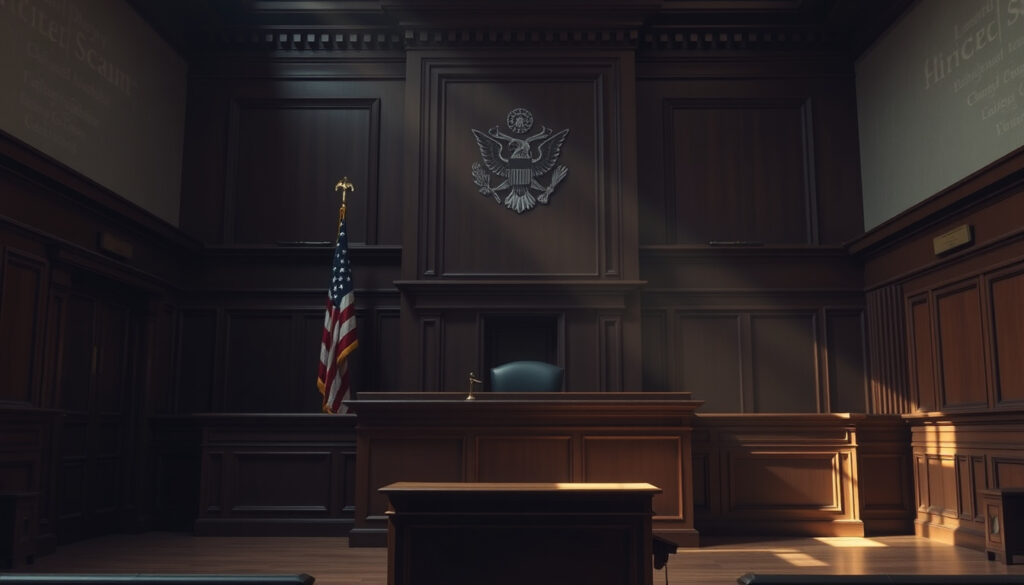
The line “You can’t handle the truth!” arrives in the final minutes of the trial, after Lt. Kaffee has cornered Colonel Jessup on the witness stand. It is a single, devastating line that collapses the entire moral architecture of the command structure. The scene draws on the tension built over 138 minutes: the audience knows Kaffee is right, but Jessup’s fury drowns out the truth.
Why ‘You can’t handle the truth!’ became iconic
The phrase has been quoted, parodied, and memed for three decades. According to No Film School (film education), the original script line was slightly different — though Nicholson did not improvise the final version, Sorkin had written it. What made it iconic was Nicholson’s delivery: the cold fury, the slow burn, the calculated menace that turned a scripted line into a cultural artifact.
The line works because it is true for Colonel Jessup — he genuinely believes Kaffee cannot process the moral compromises of military command. That psychological complexity, not the words themselves, is what made audiences keep quoting it for 30 years.
The trade-off: You can quote the line in two seconds, but the full scene runs five minutes of escalating confrontation. The shorthand has become the entire movie for many viewers — a remarkable compression of a complex dramatic arc into a single, explosive moment.
Is A Few Good Men worth watching?
Critical reception and awards
The film holds an 83% critical approval rating on Rotten Tomatoes (review aggregator) and an 88% audience score. It was nominated for four Academy Awards, including Best Picture, Best Supporting Actor for Jack Nicholson, Best Sound, and Best Film Editing. Yahoo Entertainment (film journalism) notes that at 30 years after release, Rob Reiner still recalls the electric atmosphere on set during the courtroom scene.
Audience opinions and ratings
With an IMDb rating of 7.7/10 from over 300,000 votes, the film consistently sits near the top of the legal drama subgenre. IMDb Trivia (film database) lists the “Code Red” as a real military punishment, adding factual grounding that rewards repeat viewings. Viewers do not tire of the courtroom mechanics: the film was designed with a precision that rewards close attention to legal procedure.
Comparison with other legal dramas
Two things set this film apart from contemporaries like Philadelphia or The Firm: first, it focuses on the defense attorney’s moral awakening rather than the crime itself. Second, the villain is not a corrupt institution but an officer who believes he acted correctly. Film School Rejects (film analysis) argues that this moral ambiguity — Jessup’s genuine conviction that he did the right thing — elevates the film above standard courtroom fare.
Upsides
- Iconic performances from Nicholson and Cruise
- Script precision that rewards multiple viewings
- Grounded in a real military incident
Downsides
- Some legal procedures are dramatized for effect
- Secondary characters (Galloway, Ross) feel underdeveloped
- Pacing in the first hour can feel slow
What crime did Colonel Jessup commit?
The charge of conspiracy to commit murder
Colonel Jessup ordered the “Code Red” that directly resulted in the death of Marine Lance Corporal William T. Santiago. The charge — conspiracy to commit murder — carries a maximum sentence of life in prison. During the trial, Kaffee proves that Jessup not only ordered the hazing but attempted to cover it up by destroying evidence and intimidating witnesses.
The legal outcome and punishment
Jessup is found guilty of conduct unbecoming an officer and several other charges. The film ends before sentencing, but the implication is clear: dishonorable discharge and likely a lengthy prison sentence. The ambiguity — not showing Jessup’s punishment — is intentional. Sorkin wanted the audience left with the moral question rather than the procedural answer.
What this means: Colonel Jessup’s crime was not just ordering a hazing. It was believing that the ends justified any means — that the mission of defending the base overrode the life of a single Marine. The film refuses to exonerate or fully condemn him, leaving the audience to wrestle with the same moral calculus.
Did Jack Nicholson and Tom Cruise get along in A Few Good Men?
- Jack Nicholson and Tom Cruise had a professional and friendly working relationship on set, according to Yahoo Entertainment (film journalism).
- Nicholson praised Cruise’s work ethic in interviews, and no reports of tension have surfaced in decades of coverage.
- The famous courtroom scene was a showcase of mutual respect: both actors pushed each other to deliver their best performances.
The catch: the on-screen hostility between Jessup and Kaffee was so convincing that some audiences assumed real friction — a testament to the professional distance both actors maintained between the characters and themselves.
youtube.com, evrimagaci.org, x.com, msn.com, youtube.com, movie-quotes.com, youtube.com
For those curious about the real events that inspired the film, the true story behind A Few Good Men offers a detailed look at the Guantánamo incident and the famous courtroom line.
Frequently asked questions
What is the rating of A Few Good Men on IMDb?
7.7/10 from over 300,000 user ratings.
Who wrote the screenplay for A Few Good Men?
Aaron Sorkin, adapted from his own play (Film School Rejects (film analysis)).
Where was A Few Good Men filmed?
Primarily in Washington, D.C., and at soundstages in California, with the courtroom set built on a soundstage.
What awards did A Few Good Men win?
It was nominated for four Academy Awards but did not win any; Jack Nicholson’s performance earned him a Golden Globe nomination.
What is the significance of the title ‘A Few Good Men’?
The phrase refers to the traditional Marine Corps recruiting slogan — a ironic contrast with the film’s exploration of systemic failure within the Corps.
How long is the runtime of A Few Good Men?
138 minutes.
Is A Few Good Men based on a true story?
Loosely — the premise draws from a real 1986 Guantánamo Bay incident, but characters and events are fictional (CinemaBlend (entertainment news)).
More related posts
 GAA on TV Today RTÉ: Live Schedule & Times
 What Is the Book of Kells – History, Art and Significance
 Champions League Final Tickets 2026: Ballot, Prices & How to Buy
 Easy Argentinian Recipes at Home (Quick Meals)
 Pizza Hawaiian Near Me: Best Chains, Delivery & Menus
 Old Town Wine Bar Dublin: Menu, Dress Code & Insider Tips
 Chine e Calendar Baby Gender 2026: How It Work and Accuracy
 Best Group Exercises at Home: 7-7-7 Rules & Big 7 Movements