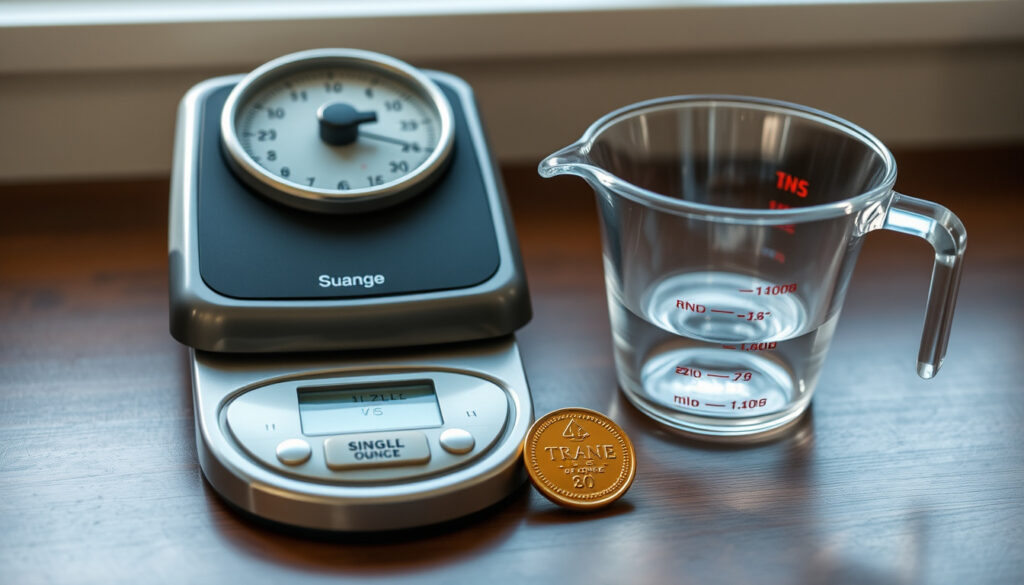
How Many Grams in an Ounce? Standard vs Troy Ounce Guide
You’ve probably found yourself staring at a recipe that calls for 8 ounces of flour, or checking the weight of a gold coin, and wondered: how many grams is that exactly? The answer depends on which ounce you mean – because there are two different standards. The U.S. National Institute of Standards and Technology (NIST Handbook 44, Appendix C) defines the standard avoirdupois ounce as exactly 28.349523125 grams, while a troy ounce, used for precious metals, weighs 31.1034768 grams. This guide lays out both systems so you never confuse a kitchen measurement with a bullion transaction.
Standard ounce (avoirdupois) to grams: 1 oz = 28.3495 g · Troy ounce to grams: 1 troy oz = 31.1035 g · Gold purity 24k grams per troy ounce: 31.1035 g · Common kitchen conversion (rounded): 1 oz ≈ 28 g
Quick snapshot
- Used for food, body weight, general items (NIST Handbook 44)
- 1 oz = 28.3495 g (NIST Handbook 44)
- 16 oz in 1 pound (NIST Handbook 44)
- Used for gold, silver, platinum, palladium (NIST OWM Precious Metals)
- 1 troy oz = 31.1035 g (NIST OWM Precious Metals)
- 12 troy oz in 1 troy pound (NIST OWM Precious Metals)
- 1 oz ≈ 28 g (rounding for recipes, The Silver Mountain)
- 1/4 oz ≈ 7 g (The Silver Mountain)
- 1/2 oz ≈ 14 g (The Silver Mountain)
- Gold always weighed in troy ounces (BullionVault)
- Purity (karat) does not change weight per ounce (BullionVault)
- 24k = 99.9% pure gold by weight (BullionVault)
The table below provides five exact conversions every reader should know.
| Conversion | Exact Value (grams) |
|---|---|
| Standard ounce to grams | 28.349523125 g |
| Troy ounce to grams | 31.1034768 g |
| Pounds to grams | 453.59237 g |
| Quarter ounce to grams | 7.08738078 g |
| Half ounce to grams | 14.17476156 g |
How many grams are in an ounce?
If you’re measuring flour, sugar, or your own body weight, you’re in the avoirdupois world. NIST’s official definition (NIST Handbook 44, Appendix C) gives 28.349523125 grams per ounce – a number that’s almost always rounded to 28.35 g for everyday use. In kitchens across the U.S., recipes commonly say “1 oz ≈ 28 g” because that’s close enough for baking.
Standard ounce to grams conversion
- Exact: 1 oz = 28.349523125 g
- Kitchen rounding: 1 oz ≈ 28.35 g
- Common approximation: 1 oz ≈ 28 g
Why the exact number matters
Precision counts in commercial settings. A postal scale calibrated to NIST standards must deliver that exact conversion. For a recipe, the difference between 28 g and 28.35 g is negligible – about a pinch of salt. But for a shipment of precious metals, every decimal point represents real money. Atkinsons Bullion (precious metals dealer) warns that cookbook ounces and bullion ounces should never be interchanged without specifying the system.
The implication: if you’re measuring for a cake, round to 28 g and you’re fine. If you’re weighing gold, you need the full 28.3495 g – but only if it’s a standard ounce, which gold usually isn’t.
How many grams are in a troy ounce?
This is the ounce investors and jewelers rely on. The troy ounce is the standard unit for gold, silver, platinum, and palladium across global markets. According to NIST’s Precious Metals Conversion Information, one troy ounce equals 31.1034768 grams – about 10% heavier than a standard ounce.
Difference between troy and avoirdupois ounce
The following table highlights the key differences between the two ounce systems.
| Attribute | Avoirdupois Ounce | Troy Ounce |
|---|---|---|
| Grams per ounce | 28.349523125 | 31.1034768 |
| Grains per ounce | 437.5 | 480 |
| Ounces per pound | 16 | 12 |
| Common uses | Food, body weight, everyday goods | Gold, silver, platinum, palladium |
A troy ounce is roughly 1.097 avoirdupois ounces. StoneX Bullion (commodities broker) explains that the 10% weight premium is the single biggest reason investors lose money when they confuse the two.
Why gold, silver, platinum use troy weight
The system dates back to the French city of Troyes, a medieval trading hub. Today, BullionVault (online gold exchange) notes that “gold and other precious metals are typically quoted in troy ounces rather than kitchen ounces.” That’s why a 1 oz gold coin doesn’t weigh the same as a 1 oz steak.
The pattern: precious metals trade on centuries-old conventions that protect the consistency of bullion pricing. The catch: if you bring a kitchen scale to a gold dealer, you’ll undercount your gold by nearly 10%.
Why is 1 oz of gold 31 grams?
Because “1 oz of gold” always means 1 troy ounce. U.S. Gold Bureau (precious metals dealer) explains that a 1 oz gold coin or bar contains 31.1034768 grams – not 28.35 g. That’s the industry standard, and it doesn’t change based on purity.
Origin of the troy ounce for gold
The troy system was formalised in England in the 15th century and later adopted by the U.S. Mint. Wikipedia (historical reference) traces it to Troyes, France, though some historians debate the exact origin. What’s undisputed is that the troy ounce (31.1035 g) became the gold standard for bullion.
Gold purity and weight: 24k vs 22k
- 24k gold – 99.9% pure. Weight per troy ounce: 31.1035 g of which virtually all is gold.
- 22k gold – 91.67% pure. Weight per troy ounce: still 31.1035 g total, but only about 28.52 g is gold; the rest is alloy.
The ounce weight stays the same regardless of karat. Purity changes the gold content, not the total mass. That’s a common point of confusion even among experienced buyers.
Why this matters: when you buy a 1 oz 22k coin, you’re paying for a full troy ounce of metal – about 31.1 g – but the pure gold portion is only ~91.67% of that. Always check the fine weight.
Does 30 grams equal 1 ounce?
Not exactly. 30 grams is a quick mental reference but misses the mark in both systems.
30 grams in standard ounces
Divide 30 by 28.3495 → about 1.058 ounces. So 30 g is slightly more than 1 standard ounce.
30 grams in troy ounces
This table shows how 30 grams compares to both ounce types.
| System | 30 g equals |
|---|---|
| Avoirdupois ounce | 1.058 oz |
| Troy ounce | 0.965 troy oz |
The trade-off: 30 g serves as a useful rule of thumb in a kitchen, but it’s not a valid conversion for precision work or bullion trading. For gold, the exact NIST conversion is 31.1035 g per troy ounce.
How many grams in a quarter ounce and half ounce?
Fractional ounces come up often in cooking (spices, herbs), cannabis purchases, and gold coin sizes. Let’s pin down the numbers.
Quarter ounce to grams
- Standard (avoirdupois) quarter ounce: 1/4 × 28.3495 g = 7.0874 g
- Kitchen rounding: often called “7 grams”
- Troy quarter ounce: 1/4 × 31.1035 g = 7.7759 g
Half ounce to grams
- Standard half ounce: 1/2 × 28.3495 g = 14.1748 g
- Kitchen rounding: often called “14 grams”
- Troy half ounce: 1/2 × 31.1035 g = 15.5517 g
The Silver Mountain (bullion retailer) notes that precious metal rounds and bars often come in 1/4 oz and 1/2 oz sizes – but those are troy ounces, not kitchen ounces. A 1/2 oz gold coin contains 15.55 g of metal, not 14.17 g.
The pattern: fractional conversions look close on paper but differ by about 0.7 g for a quarter ounce – enough to matter when buying a gold coin worth hundreds of dollars.
How many grams in a pound?
Once you know the ounce-to-gram conversion, the pound is a simple multiplication. But again, there are two pound systems.
Pounds to ounces to grams chain
Here are the pound conversions across both systems.
| System | Ounces per pound | Grams per pound |
|---|---|---|
| Avoirdupois pound | 16 oz | 453.59237 g |
| Troy pound | 12 troy oz | 373.24172 g |
For everyday use (body weight, groceries), the avoirdupois pound is the standard. The troy pound is rarely used outside of precious metals; bullion is almost always quoted per ounce. But knowing the chain helps: 1 lb = 16 oz = 453.592 g.
The implication: if you’re converting a recipe that calls for 1 lb of flour, that’s 453.6 g – but if you buy 1 lb of gold, you’re getting only 373.2 g because gold is sold by the troy pound (if ever quoted that way). In practice, you’ll never see a gold bar marked “1 lb” – it will say “troy ounces.”
The difference between 453.6 g and 373.2 g isn’t a rounding error – it’s a 21% discrepancy. Always check whether “pound” means avoirdupois or troy before you buy or sell in volume.
Confirmed facts vs. what’s unclear
Confirmed facts
- 1 avoirdupois ounce = 28.349523125 grams (NIST Handbook 44)
- 1 troy ounce = 31.1034768 grams (NIST OWM Precious Metals)
- Gold is traded in troy ounces globally (BullionVault)
What’s unclear
- Exact historical origin of the troy ounce (likely from Troyes, France, but debated among historians)
- Whether some online calculators use slight rounding differences (e.g., 31.1 vs 31.1035) – NIST’s value is definitive
- Troy pound contains 12 troy ounces (historical definition, but rarely used in modern bullion trading)
“The troy ounce is the standard mass unit for precious metals in trade and industry. It contains 480 grains, while the avoirdupois ounce contains 437.5 grains.”
NIST OWM Precious Metals Conversion Information (U.S. national measurement authority)
“Gold is traditionally weighed in troy ounces, a system dating back to medieval times. A 1 oz gold coin or bar should never be compared to a 1 oz kitchen ingredient.”
For anyone buying or selling precious metals, the choice between ounce systems can mean a 10% swing in value. The same applies in the kitchen when precision matters for baking. The fix is simple: always specify “avoirdupois” or “troy” when writing a conversion, and when in doubt, use grams – they’re the same everywhere.
bullionstandard.com, stonexbullion.com, reddit.com, atkinsonsbullion.com, reddit.com, math.answers.com, youtube.com
For a more comprehensive breakdown of the differences between avoirdupois and troy ounces, see this detailed guide on ounce types.
Frequently asked questions
How many grams in an ounce of gold 24k?
One troy ounce of 24k gold weighs 31.1034768 grams. The karat indicates purity (99.9% gold), not weight.
How many grams in an ounce of gold 22k?
Still 31.1035 g total, but the pure gold content is only 91.67% – about 28.52 g of gold plus alloy.
Is 30 grams equal to 1 ounce?
No. 30 grams equals about 1.058 standard ounces or 0.965 troy ounces. It’s a rough kitchen shortcut, not a precise conversion.
Why is a troy ounce heavier than a standard ounce?
Because the two systems define an ounce differently. A troy ounce has 480 grains vs. 437.5 grains in a standard ounce – about a 10% difference.
How many grams in a quarter ounce of gold?
A quarter troy ounce of gold is 7.7759 grams (exact: 31.1035 / 4).
How many grams in a half ounce of silver?
A half troy ounce of silver is 15.5517 grams (exact: 31.1035 / 2).
What is the difference between ounce and troy ounce?
An “ounce” typically means avoirdupois ounce (28.35 g) used for everyday items. A troy ounce (31.10 g) is used exclusively for precious metals.
More related posts
 Tomorrow’s Catholic Mass Readings and Reflection Guide
 Slow Cooker Chicken Recipes: Easy BBC Good Food Picks
 Thomas the Tank Engine – History, Creator and Legacy
 John Cena Last Match: Results and Highlights
 Easy Argentinian Recipes at Home (Quick Meals)
 A2 Size in cm: Paper Dimensions and Comparison Guide
 Ireland Weather Heat Plume: Forecast, Records, and Safety Tips
 Michael Kors Kildare Village – Hours, Deals and Directions