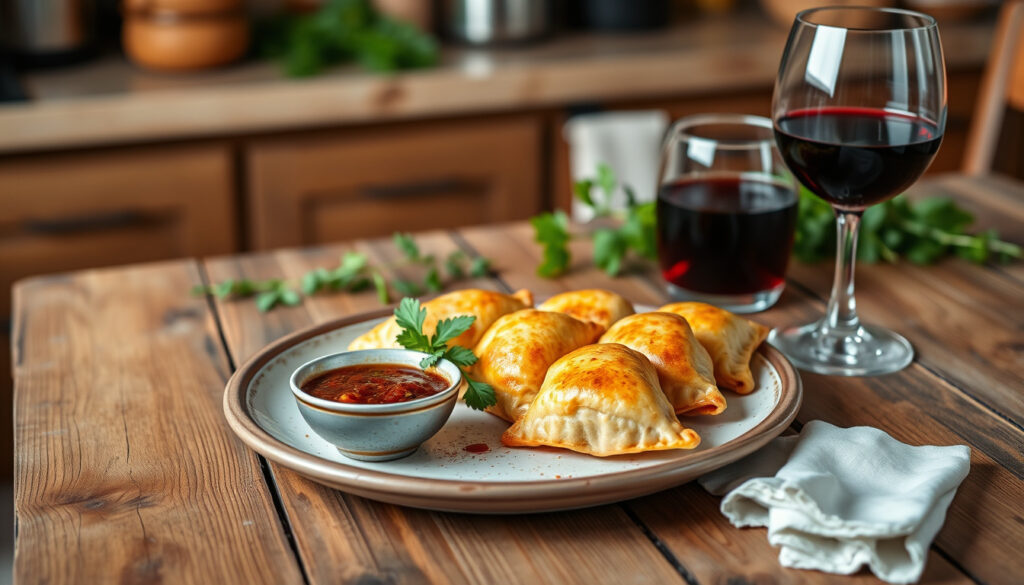
Easy Argentinian Recipes at Home (Quick Meals)
You don’t need a parrilla or a plane ticket to Buenos Aires to cook real Argentine food at home. A handful of supermarket staples—parsley, garlic, flour, onions—and one or two new techniques are all it takes to bring chimichurri, empanadas, and milanesa to your kitchen. Here are five beginner-friendly dishes, starting with a sauce that takes ten minutes and requires zero cooking.
Chimichurri prep time: 10 minutes ·
Empanada dough resting time: 30 minutes ·
Milanesa cooking time per side: 3-4 minutes ·
Provoleta grilling time: 8-10 minutes ·
Dulce de leche simmer time: 90 minutes
Quick snapshot
- 10 minutes (Argentum Empanadas test kitchen)
- 5 ingredients (Argentum Empanadas test kitchen)
- No cooking required (Argentum Empanadas test kitchen)
- Customizable filling (Pampa Direct guide)
- Baked or fried (Pampa Direct guide)
- Great for leftovers (Pampa Direct guide)
- 20 minutes total (South American Bites guide)
- Beef or chicken (South American Bites guide)
- Crispy breaded coating (South American Bites guide)
- 8 minutes grilling (Recetas Nestlé Argentina)
- Cheesy appetizer (Recetas Nestlé Argentina)
- Oregano and olive oil (Recetas Nestlé Argentina)
Four core dishes, one pattern: each uses ingredients you can buy at any supermarket and relies on technique, not specialty gear. Here is how the key metrics stack up.
| Dish | Prep + cook time | Key ingredient | Skill level |
|---|---|---|---|
| Chimichurri | 10 min | Parsley, garlic, olive oil, vinegar | Beginner |
| Empanadas (baked) | 20 min prep + 30 min rest + 30 min bake | All-purpose flour, butter, filling | Beginner |
| Milanesa (beef) | 15-20 min | Breadcrumbs, eggs, beef cutlets | Beginner |
| Milanesa (chicken) | 15-20 min | Breadcrumbs, eggs, chicken breast | Beginner |
| Provoleta | 8-10 min | Provolone cheese, oregano | Beginner |
| Carbonada | 45-60 min | Beef, pumpkin, corn, potatoes | Intermediate |
| Humita | 20-25 min | Corn, cheese, onion | Beginner |
| Alfajores (quick) | 10 min assembly | Cookies, dulce de leche, coconut | Beginner |
| Salsa criolla | 10 min | Onion, tomato, bell pepper, vinegar | Beginner |
Beginners who start with chimichurri and milanesa can build confidence in under 30 minutes. The real time investment is empanada dough—the 30-minute rest is passive. Carbonada demands patience but rewards with a one-pot cleanup.
What are easy Argentinian recipes to make at home with few ingredients?
Quick Chimichurri Sauce
- Finely chop one large bunch of flat-leaf parsley. Mince 3-4 cloves of garlic.
- Mix with ½ cup olive oil, 3 tablespoons red wine vinegar, 1 teaspoon dried oregano, and salt to taste. No cooking needed (Wandering Wagars recipe collection).
- Let sit at least 15 minutes before serving. Refrigerates for up to 2 weeks.
The only ingredient that might be missing from a standard pantry is fresh parsley—everything else (garlic, oil, vinegar, oregano, salt) is a kitchen staple. This is the single easiest entry point into Argentine cooking.
Simple Empanada Dough
- Combine 3 cups all-purpose flour, 1 teaspoon salt, ½ cup cold butter (cut into small cubes). Work into a crumbly texture.
- Add 1 beaten egg and enough milk (about ⅓ cup) to form a smooth dough (Wandering Wagars recipe).
- Wrap and rest at room temperature for 30 minutes. This relaxes the gluten and prevents shrinking.
One-Pan Milanesa
- Pound beef cutlets or chicken breast to ¼-inch thickness. Season with salt and pepper.
- Dredge in flour, then beaten egg, then breadcrumbs (Recetas Nestlé Argentina method).
- Heat ½ inch vegetable oil in a skillet. Fry 3-4 minutes per side until golden brown and internal temperature reaches 165°F (74°C) for chicken.
- Drain on paper towels. Serve with lemon wedges.
Three dishes, three techniques—but every ingredient is found in a typical US or UK supermarket. The biggest barrier for most home cooks isn’t the method; it’s the belief they need specialty stores. They don’t.
What are simple Argentinian recipes for dinner?
Grilled Provoleta
- Slice provolone cheese (a ½-inch thick cross-section from a round) and place on a grill or grill pan.
- Cook 4 minutes per side until golden and melty, but not running off the pan.
- Drizzle with olive oil and sprinkle dried oregano and chili flakes. Serve immediately.
Beef Stew (Carbonada)
- Brown 1 pound stewing beef in a large pot. Remove and set aside (Recetas Nestlé Argentina guidelines).
- Sauté chopped onion and bell pepper until soft. Add beef back in, plus 1 can diced tomatoes, 4 cups beef broth, 1 cup kernel corn, and 2 diced potatoes.
- Simmer 45-60 minutes until beef is tender and flavors meld.
- Toward the end, stir in 1 cup diced pumpkin or sweet potato for sweetness and body.
Stuffed Bell Peppers
- Cut tops off 4 bell peppers. Remove seeds.
- Mix 1 pound ground beef (or pulverized meat scraps from milanesa cuts), 1 cup cooked rice, ½ cup diced onion, 1 teaspoon cumin, salt, and pepper.
- Stuff peppers, top with breadcrumbs and a drizzle of olive oil. Bake covered at 375°F for 25 minutes.
The trade-off: carbonada and stuffed peppers both require about an hour from start to table, but they’re hands-off after the initial prep. Provoleta is the counterbalance—it’s ready in the time it takes to set the table.
What are easy vegetarian Argentinian recipes?
Vegetarian Empanadas
- Use the same dough from the earlier recipe. For filling, mix 1 cup grated mozzarella or queso fresco, ½ cup cooked spinach (thawed frozen works), and ¼ cup finely diced onion.
- Season with salt, pepper, and a pinch of nutmeg.
- Fill and seal with a fork. Bake at 400°F for 20 minutes or until golden.
Humita (Corn Stew)
- Sauté 1 diced onion in 2 tablespoons butter until soft (Wandering Wagars recipe).
- Add 4 cups corn kernels (fresh, frozen, or canned), 1 cup milk, ½ teaspoon salt, and ¼ teaspoon nutmeg.
- Simmer 15 minutes, then stir in ½ cup grated Parmesan or queso fresco. Cook 5 more minutes until creamy.
Grilled Vegetable Platter with Chimichurri
- Slice zucchini, bell peppers, eggplant, and red onion into ½-inch planks. Toss with olive oil and salt.
- Grill or pan-sear 4-5 minutes per side until char marks appear.
- Spoon chimichurri generously over the hot vegetables. The acidity cuts through the smoke.
The implication: Argentine cuisine is often described as meat-centric, but humita and cheese empanadas prove vegetarian options are both traditional and forgiving for new cooks. You don’t need to prep a protein at all.
What is a simple Argentinian chicken recipe?
Chicken Milanesa
- Follow the same breading method as beef milanesa, but use boneless, skinless chicken breast pounded to even thickness.
- Cook 3-4 minutes per side. Check internal temp at 165°F.
Chicken Empanadas
- Poach 2 chicken breasts in salted water until cooked through. Shred finely.
- Mix with ½ cup diced onion (sautéed until golden), ¼ cup sliced green olives, 1 hard-boiled egg (chopped), and ½ teaspoon cumin.
- Fill empanada discs and bake at 400°F until golden.
Grilled Chicken with Chimichurri
- Season chicken thighs or breasts with salt and pepper. Grill or pan-sear until cooked through.
- Rest 5 minutes, then liberally spoon chimichurri over the top. The sauce acts as both marinade and finishing condiment.
Chicken milanesa is actually harder to execute than beef because lean chicken dries out quickly. Beginners who nail the breading technique on beef first will have an easier transition to poultry.
The pattern: mastering breading on beef first makes the transition to chicken smoother.
How do I make Argentinian food easily?
Essential Pantry Items
- Olive oil: Extra-virgin for chimichurri and salsa criolla; regular for frying milanesa.
- Garlic: Fresh cloves, not pre-minced. The flavor is noticeably brighter in raw sauces.
- Parsley: Flat-leaf (Italian) parsley has better texture than curly for chimichurri.
- Onions: Yellow or white onions for fillings and stews.
- Beef or chicken: Milanesa cuts (top round, sirloin) or chicken breast.
Step-by-Step Chimichurri
- Finely chop 1 cup flat-leaf parsley (leaves only, no thick stems).
- Mince 4 garlic cloves.
- Combine with ½ cup olive oil, 3 tablespoons red wine vinegar, 1 teaspoon dried oregano, ½ teaspoon salt, and ¼ teaspoon black pepper (Argentum Empanadas beginner recipe).
- Stir well, taste, adjust salt. Let rest 15-30 minutes.
- Refrigerate leftovers for up to 2 weeks. The flavor deepens over 24 hours.
No-Fail Empanada Assembly
- Roll dough discs to 4-inch diameter, about ⅛ inch thick.
- Spoon 1-2 tablespoons filling into the center. Do not overfill—moisture leakage is the top cause of broken empanadas.
- Fold dough over into a half-moon. Press edges firmly with your fingers.
- Seal by pressing tines of a fork along the edge. This also creates the classic crimped pattern.
- Bake at 400°F for 20-25 minutes until golden. Brush tops with egg wash for shine.
Why this sequence works: you learn the sauce first (zero risk), then dough (some patience required), then milanesa (heat management). Each dish teaches a skill that applies to the next. If you make only one thing, make chimichurri—it transforms any protein or vegetable into a meal with Argentine character.
Confirmed facts vs. what’s still unclear
Confirmed facts
- Chimichurri is a raw sauce of parsley, garlic, oil, and vinegar (Wandering Wagars).
- Traditional empanadas use beef, onions, and hard-boiled eggs (Recetas Nestlé Argentina).
- Milanesa is derived from Italian cotoletta (South American Bites culinary background).
- Carbonada combines beef, pumpkin, and corn in a one-pot stew (Recetas Nestlé Argentina).
- Provoleta cooking time is 8-10 minutes on a grill or pan (Pampa Direct guide).
What’s unclear
- Exact origin of empanada dough lard versus butter ratio varies by region. Family recipes differ significantly; no single authoritative standard exists.
- Carbonada’s exact ingredient list varies by region; some versions include sweet potato or pumpkin.
- The cooking time for dulce de leche is not specified in many sources.
Related reading: easy argentinean recipes · Argentinian recipes
youtube.com, scribd.com, woodentablebaking.com, es.scribd.com
For even more quick inspiration, you can browse authentic Argentinian recipes that showcase five traditional dishes.
Frequently asked questions
What is the most popular Argentinian dish?
Asado (barbecue) is the national dish, but for home cooking, milanesa and empanadas are the most prepared meals across Argentine households (Wandering Wagars).
Can I freeze chimichurri?
Yes. Freeze in ice cube trays, then transfer to a freezer bag. Thawed chimichurri is slightly less vibrant but preserves flavor for up to 6 months.
What is the difference between Argentinian and Mexican empanadas?
Argentinian empanadas use wheat flour dough (often with butter or lard) and are smaller, baked, and typically filled with beef, onion, olives, and hard-boiled egg. Mexican empanadas may use corn masa and are often fried (Argentum Empanadas).
Is milanesa the same as chicken fried steak?
Very similar. Both are breaded and fried cutlets. Milanesa is thinner, uses less seasoning in the breading, and is served with lemon rather than gravy. The technique is nearly identical.
What cheese is used for provoleta?
Traditional provoleta is provolone cheese, preferably a mild, semi-hard variety like Argentine or Italian provolone. Smoked provolone can be used for a deeper flavor.
Can I make Argentinian food without a grill?
Yes. All recipes in this guide use stovetop, oven, or grill pan methods. Chimichurri requires no heat at all.
What cut of beef is best for carbonada?
Stewing beef—chuck, bottom round, or brisket—works best because the long simmer breaks down connective tissue. Avoid lean cuts like sirloin as they toughen.
For the home cook with a standard supermarket run and 30 minutes to spare, the clearest starting point is chimichurri plus milanesa. Everything else expands from those two foundations. The choice for a beginner is not which cuisine to tackle but whether to start with a sauce or a cutlet—either way, Argentine flavor is on the table in under 20 minutes.
“Chimichurri is the single easiest entry point into Argentine cooking because it requires no heat and transforms any protein or vegetable.”
“Do not overfill empanadas—moisture leakage is the top cause of broken empanadas. A light hand with the filling is key.”
More related posts
 H&M Cork: Opening Hours, Store Info & Online Shopping
 My Parents Are Aliens: Plot, Cast Changes & Ending Guide
 Man U vs Grimsby: Shocking 12-11 Penalty Loss in Carabao Cup
 South East Technological University: Rankings, Location, Reviews
 Sports Direct Promo Code Ireland: Verified Discounts
 Am I Gay Quiz? What Online Tests Can and Cannot Tell You
 Liam Neeson Net Worth Breakdown: $120 Million Fortune
 How to Say the Rosary: Step-by-Step Guide for Beginners